Why a 3.6 GPA Doesn't Guarantee a Job Anymore

Every college has one. The 3.6 GPA student who did everything right and still has nothing lined up by senior spring. Meanwhile, a 2.8 GPA classmate has two offers.
That gap is not random, and it is not really about intelligence or effort. It is about what happens after the GPA, in the part of the process nobody teaches.
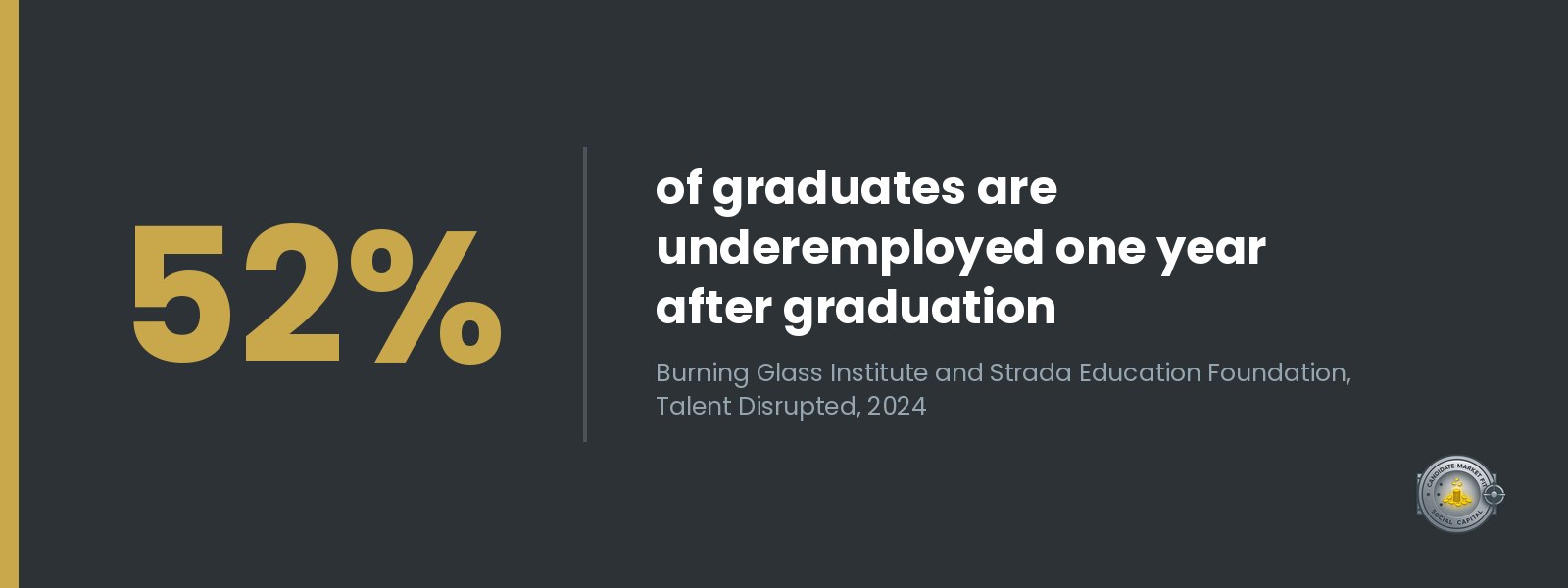
What a GPA actually signals to an employer
A high GPA tells a recruiter you can follow instructions and meet a deadline inside a classroom. It says almost nothing about whether you can identify the right role, explain why you fit it, or get in front of the person who can hire you.
Most recruiting happens before a job is ever posted. By the time a listing goes live, a company often already has an internal candidate in mind. A transcript cannot get you into that conversation. A relationship can.
The students who struggle most are usually the ones who assumed the GPA was the whole strategy.
What the 2.8 GPA students are doing differently
They treat the job search as a system, not a hope. They identify a small number of roles where their background is a genuine advantage, build a professional presence that supports that pitch, and reach the people who make hiring decisions directly instead of waiting in a stack of five hundred applications.
None of that requires a higher GPA. It requires a plan, built early enough to matter.
The fix starts now, not senior year
Every semester without a plan is a semester a classmate spent building one. The earlier the system starts, the less panic drives the decisions in the final year.
Career Currency Academy is the 8-module system that builds this plan, starting wherever you are in college.
See the Full System